Unlocking Asia’s Secret Temples: A Guide for the Experienced Traveler
Recent Trends
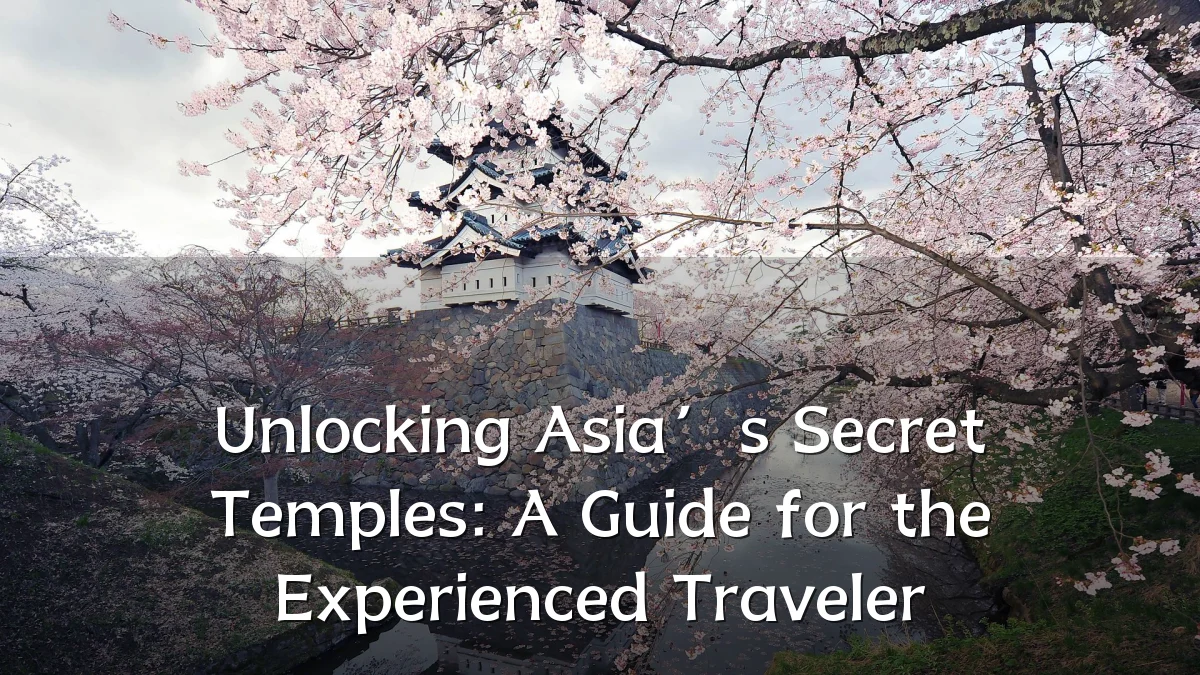
Over the past several travel seasons, seasoned explorers have increasingly moved beyond Angkor Wat and Borobudur toward lesser-known temple complexes across Asia. Social media fatigue with crowded landmarks and a growing appetite for “off-path heritage” are driving this shift. Independent travelers now seek sites that require multi-day treks or regional permits, often in remote valleys of Myanmar, Laos, or Indonesia. Some groups arrange small, private guided walks through temple clusters that lack visitor centers or entrance fees, relying on local village knowledge rather than guidebooks.

Background
Asia’s “secret temples” are not newly discovered — many have been documented by archaeologists for decades but remain omitted from standard tourist circuits due to limited infrastructure, political sensitivity, or conservation restrictions. Examples include pre-Angkorian sanctuaries in northeastern Thailand, Champa towers in central Vietnam, and forgotten Buddhist cave-temples along the Silk Road in western China. These sites often lack interpretive signage and are maintained by local monastic communities or heritage volunteers. The term “secret” in practice means low visitor numbers and minimal commercial development, not hidden from locals.
- Many sites have been on UNESCO tentative lists for years but lack protection funding.
- Seasonal access is a factor: monsoon rains can close dirt roads for weeks in Laos and Cambodia.
- A few temples require advance permission from district authorities or monastery abbots.
User Concerns
Experienced travelers raise several practical and ethical concerns when planning visits to such temples. Access reliability tops the list: unofficial trails may be unmarked, and guidebooks or online forums often carry outdated directions. Conservation etiquette is another issue — some temple structures are still used for active worship, and visitors must be mindful of dress codes, photography restrictions, and donation expectations. The risk of contributing to overtourism in fragile settings is also a worry, especially as social media posts can quickly turn a quiet site into a viral destination.
- How to verify that a temple is truly open to visitors without disturbing local practices.
- Whether to hire a local guide for safety and cultural context, especially in border regions.
- What to do about lack of emergency services — nearest clinics can be hours away.
Likely Impact
The gradual shift of seasoned travelers toward low-profile temple sites will likely prompt small-scale tourism infrastructure — basic homestays, shared transport options, and local guide cooperatives — rather than large resorts. Conservation bodies may face pressure to improve site management without raising entry fees to levels that exclude local worshippers. In the medium term, a few temple clusters could become “semi-secret,” gaining enough recognition to receive preservation grants while still limiting daily visitor caps. Conversely, any rapid spread of viral imagery from such sites could trigger unsustainable numbers, as seen with several waterfalls and hill-tribe villages in recent years.
| Positive Outcome | Negative Risk |
|---|---|
| Local communities earn supplementary income through guiding and crafts. | Unregulated development damages fragile stonework and murals. |
| Increased funding for archaeological surveys and basic signage. | Cultural commodification — rituals staged for tourist cameras. |
| Deeper traveler knowledge of regional art and religious history. | Litter and erosion on unmaintained footpaths. |
What to Watch Next
Observers should monitor the introduction of timed-entry systems or permit quotas at popular “discovered” temple sites — similar measures are already being tested at certain heritage zones in Thailand and Indonesia. Another indicator is the emergence of curated “off-grid temple” itineraries by smaller tour operators that emphasize low-impact travel. Additionally, the role of mobile mapping apps in updating trail conditions and opening times will become critical; if apps add user-verified data for these sites, access may widen considerably. Finally, watch for local government pilots that permit limited visits to currently restricted temple complexes in exchange for conservation contributions — a model that could balance preservation with experiential travel.