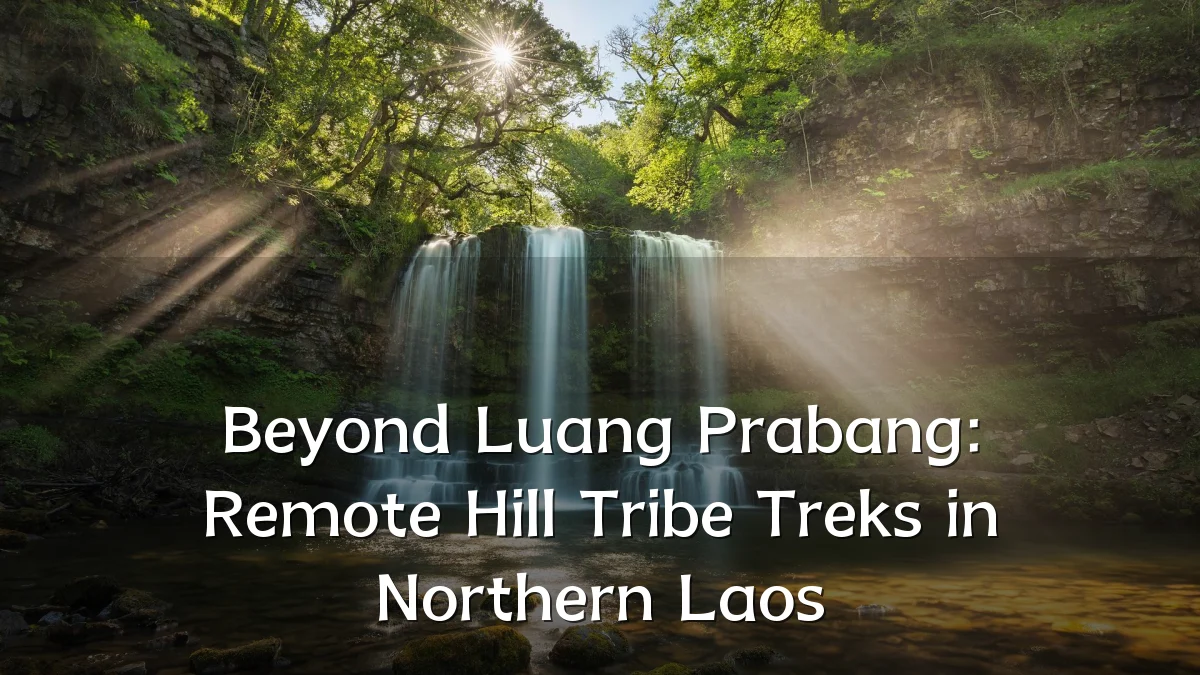
Beyond Luang Prabang: Remote Hill Tribe Treks in Northern Laos
Recent Trends
Interest in multi-day treks to isolated hill tribe villages in northern Laos has grown steadily, shifting the focus from Luang Prabang’s temples and waterfalls to deeper immersion in ethnic minority cultures. Tour operators are now offering itineraries that include homestays in Hmong, Khmu, and Akha communities, often requiring several days of hiking on unpaved trails. Community-based tourism projects, many supported by international NGOs, are also gaining traction, with revenue-sharing models that give local villagers a direct stake in guiding and accommodation.
Background
Northern Laos is home to dozens of ethnic groups, each with distinct languages, dress, and agricultural practices. Until recently, the region’s poor road infrastructure and lack of electricity in many hamlets limited access to a handful of organized tours from Luang Prabang. The government’s policy of promoting “eco-tourism” and the opening of small-scale guesthouses in villages have made it easier for adventurous travelers to reach areas once considered off-limits. Nonetheless, the majority of remote villages still rely on subsistence farming, and tourism remains a secondary, seasonal income source.

User Concerns
- Physical demands: Treks often involve steep, muddy slopes at altitudes above 1,000 meters; travelers should expect six to eight hours of walking per day with minimal rest stops.
- Cultural sensitivity: Visitors are expected to follow local customs—removing shoes before entering homes, asking before taking photographs, and dressing modestly. Missteps can cause offense.
- Basic amenities: Homestays typically provide a mat on a bamboo floor, a shared latrine, and bucket showers. Electricity may be limited or absent in the most remote settlements.
- Health and safety: Medical facilities are hours away; insect-borne diseases and intestinal issues are common. Travelers should carry a comprehensive first-aid kit and confirm evacuation options with their guide.
- Ethical impact: Some operators engage in “poverty tourism,” where visits feel transactional. Choosing a company that partners with village committees and pays fair wages helps mitigate negative effects.
Likely Impact
Well-managed trekking can inject much-needed cash into remote economies, funding school repairs, water systems, and small-scale agriculture improvements. However, a rapid increase in visitor numbers—especially without careful oversight—risks undermining traditional social structures, accelerating a shift toward cash-based economies, and encouraging begging or staged performances. Environmental strain on fragile trails and water sources is another concern. On balance, the trend is likely to persist as long as Luang Prabang remains a regional hub, but the outcomes will depend heavily on regulation and traveler education.
What to Watch Next
- Trail certification programs: Provincial tourism departments and NGOs are developing standards for responsible trekking routes; how these are enforced will shape future access.
- Infrastructure creep: New roads and mobile coverage are reaching deeper into the highlands, potentially altering the very remoteness that draws trekkers.
- Community land rights: As tourism revenue grows, disputes over land use and benefit sharing may emerge between villages and outside investors.
- Climate adaptation: Shifting rainy seasons and more intense storms could shorten the optimal trekking window (roughly November to March) and increase trail erosion.