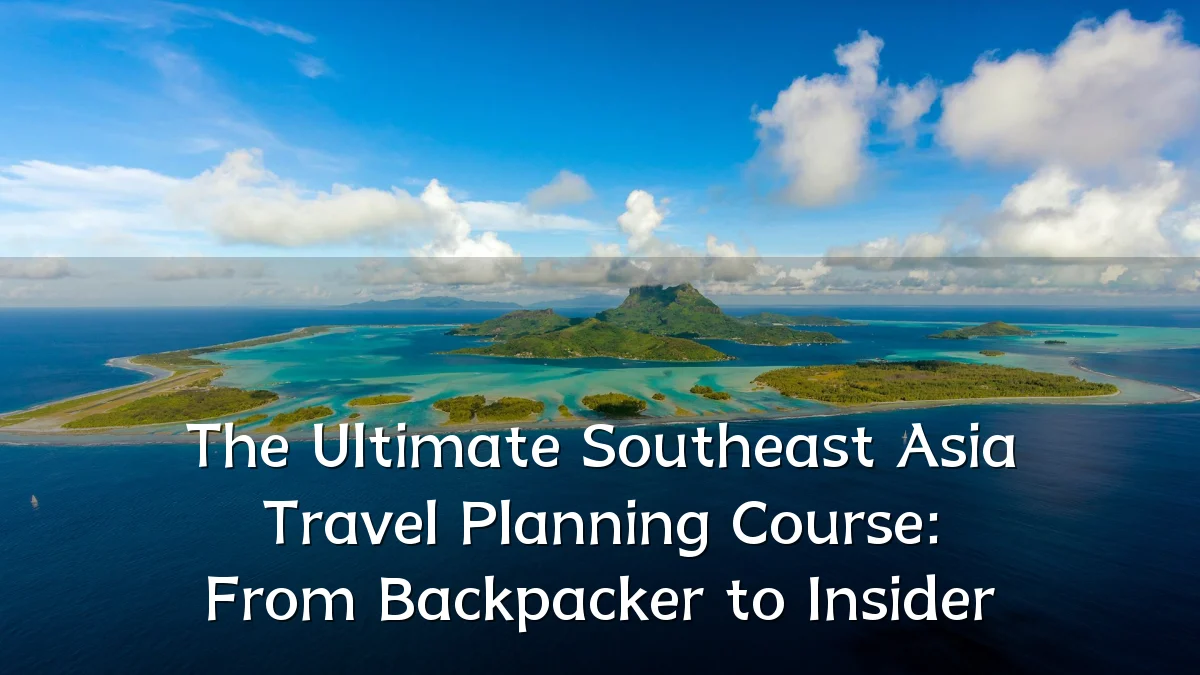
The Ultimate Southeast Asia Travel Planning Course: From Backpacker to Insider
Recent Trends in Southeast Asia Travel Education
Over the past several seasons, a growing number of travelers have moved away from generic guidebooks and hostel bulletin boards toward structured digital courses that claim to turn a first-time backpacker into a regional insider. Platforms offering modular lessons on route planning, visa logistics, cultural etiquette, and off-the-beaten-path destinations have seen a notable uptick in enrollment, especially among remote workers and gap-year students. The trend reflects a broader demand for curated, actionable knowledge that goes beyond the standard tourist circuit.

Background: From Printed Guides to Online Curricula
Travel planning for Southeast Asia has traditionally relied on printed guidebooks, word-of-mouth tips, and forum threads. The shift to online courses began in earnest as social media and video content reduced the barrier to sharing local expertise. Course creators—often seasoned travelers or expat residents—began packaging their experiences into sequential modules covering topics such as:

- Budgeting for different countries (e.g., accommodation ranges, daily meal costs)
- Transportation options (flights, trains, buses, ferries) and booking strategies
- Visa requirements and border runs for extended stays
- Packing for tropical climates and cultural sensitivity norms
- Health precautions and travel insurance decision criteria
User Concerns and Common Pain Points
Potential travelers often cite information overload and conflicting advice as major barriers. Reviews of early course offerings highlight several recurring user concerns:
- Relevance: Whether the content is current, especially regarding visa policies and safe destinations.
- Depth vs. breadth: Some courses skim over too many countries, leaving users without actionable tips for a specific itinerary.
- Cost vs. free resources: Many wonder if paid courses provide enough added value beyond what is available on blogs or YouTube.
- Authenticity: Users worry that “insider” advice may still be recycled from mainstream sources.
Likely Impact on Traveler Behavior and the Industry
If a well-structured course successfully addresses these pain points, the likely impact includes:
- More confident first-time travelers who can navigate local transport, negotiate prices, and avoid common scams.
- A shift in tourism patterns as learners deliberately seek out lesser-visited regions (e.g., northern Laos, eastern Indonesia) rather than sticking to Bangkok, Hanoi, or Bali.
- Increased demand for local guides and homestays if courses emphasize community-based tourism.
- Potential reduction in travel mistakes that lead to lost luggage, overpaying, or safety incidents.
Industry observers note that courses which incorporate real-time updates and alumni communities tend to retain users longer, suggesting that static content alone is insufficient for the fast-changing region.
What to Watch Next
The next phase of evolution for Southeast Asia travel planning courses will likely involve:
- Integration with live booking tools: Courses that link directly to price comparisons or visa application portals.
- Local partnerships: Credentialed instructors from within the region, rather than expats only.
- Sustainability modules: Guidance on minimizing environmental impact as overtourism pressures mount.
- AI-driven personalization: Adaptive quizzes that generate a custom itinerary based on budget, interests, and travel style.
- Modular micro-courses: Shorter, country-specific deep dives that users can combine as needed.